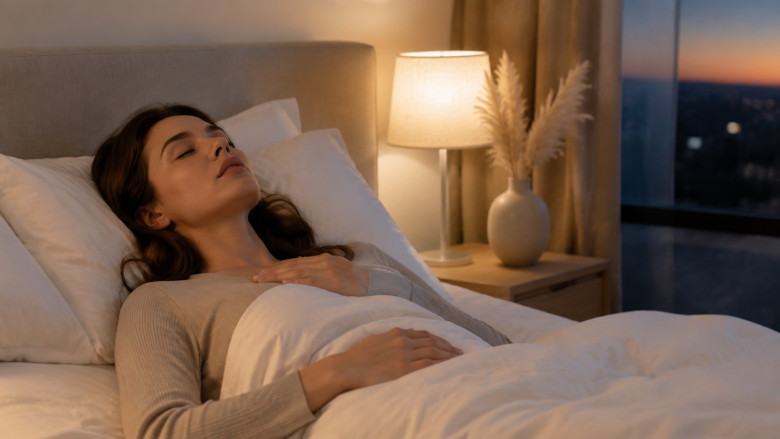
Why Most Breathing Exercises for Sleep Feel Like a Chore
You've probably seen the viral posts: 4-7-8 breathing, box breathing, the military method to fall asleep in two minutes. I tried them all. And honestly, they made me more anxious. Instead of drifting off, I'd lie there counting seconds, worrying if my inhale was exactly four seconds or if I was messing up the ratio. The irony wasn't lost on me: a technique meant to calm me down was turning into a performance review.
That's the gap most articles miss. They treat breathing as a mechanical task to be executed correctly. But if you're someone who overthinks, who has a busy mind, or who feels pressure to 'do it right,' those structured counts can backfire. The gentle breathing exercise before sleep I'm about to share is the opposite of that. It's an anti-technique. It's not about getting it right; it's about letting go. And it's the only thing that finally helped me fall asleep without a fight.
The Problem with Counting: Why It Can Keep You Awake
When you're trying to sleep, your brain is already in a vulnerable state. Adding a task-like holding your breath for seven seconds or matching a specific rhythm-can activate the prefrontal cortex, the part of your brain responsible for planning and monitoring. That's the opposite of the relaxation response you want.
Most people don't realize that the real benefit of breathing exercises for sleep comes from the parasympathetic nervous system activation, not from hitting a precise count. The vagus nerve, which runs from your brainstem to your abdomen, responds to slow, rhythmic breathing-but it doesn't care if your inhale is exactly four seconds. It cares about the trend and the softness. Forcing counts can actually create a subtle tension in the throat, chest, or diaphragm, which signals the body that something is being controlled. That tension is the enemy of sleep.
I learned this the hard way. When I first tried box breathing (inhale 4, hold 4, exhale 4, hold 4), I'd end up frustrated because my natural breath wanted to be longer on the exhale. I'd feel tightness in my chest. The thing nobody tells you about counted breathing is that it assumes a uniform lung capacity and a calm state. But if you're already wired from a stressful day, your respiratory system is in a different gear. Forcing it into a foreign pattern can feel like trying to shift a manual transmission without the clutch.
What Is a Gentle Breathing Exercise Before Sleep? (The Anti-Technique)
A gentle breathing exercise before sleep is not a technique you perform; it's a practice you allow. It's based on the principle of letting your breath find its own natural rhythm, with a soft nudge toward a longer exhale. No stopwatches, no mental math, no 'right' way.
Here's the core idea: instead of controlling the breath, you follow it. You become a witness to your own breathing, noticing the texture, the temperature, the pause at the top and bottom. When your mind wanders (and it will), you gently bring it back to the sensation of air moving in and out. That's it. No demands. No goals.
This approach is backed by the same science that makes mindfulness effective-it reduces activity in the amygdala and increases heart rate variability, which is a marker of a relaxed nervous system. But it removes the cognitive load that can come with counted techniques. For people who are overthinkers, perfectionists, or just plain tired of following instructions, this is a game-changer.
Why Exhaling Longer (Without Counting) Works
The single most important adjustment you can make is to elongate your exhale. Not because some chart says you should, but because the body naturally relaxes on the exhale. The vagus nerve is stimulated more during exhalation, and a longer exhale signals the heart to slow down. But you don't need to count seconds to achieve this.
Instead, try this: as you breathe out, imagine you're blowing through a straw. Make the exhale slightly longer than the inhale, but not by a specific number-just by a feeling. Let the breath be effortless. If you feel any strain in your throat or chest, you're pushing too hard. Soften. The goal is not to master the breath but to let it master you.
When I first tried this, I made the mistake of trying to force a long exhale. I'd purse my lips and push air out, which created tension in my jaw. The real trick is to simply let the air fall out of your lungs, like a sigh. A sigh is the body's natural way to reset the nervous system. You can build on that: take a gentle inhale through the nose, then let the exhale be a soft, open sigh through the mouth. Repeat a few times, then let the mouth drift closed and continue the same pattern through the nose. No counts, no pressure.
How to Let Your Breath Find Its Own Rhythm
This is the part that feels counterintuitive if you're used to structured exercises. Most people assume they need to 'direct' the breath. But consider this: when you're asleep, your breath is completely autonomous. Your body knows exactly how to breathe. The gentle breathing exercise before sleep is simply a way to transition from the conscious, controlled breathing of the day into that autonomous, restful state.
Here's a step-by-step approach that doesn't require any counting:
- Step 1: Get comfortable. Lie on your back with a pillow under your knees or on your side with a pillow between your knees. The goal is to support your spine so your breathing muscles can relax. If you're prone to snoring or sleep apnea, side-lying is better.
- Step 2: Take a few deep sighs. Inhale gently through your nose, then let the air fall out with a soft sigh through your mouth. Do this three times. Notice any tension in your shoulders or jaw and let it go with each sigh.
- Step 3: Let your mouth close. Now breathe only through your nose. Don't try to control the depth or rhythm. Just notice the air moving in and out. Feel the coolness at the tip of your nostrils on the inhale, the warmth on the exhale. If you lose track, that's fine. Just come back to the sensation.
- Step 4: Gently encourage a longer exhale. Without counting, see if you can let the exhale be just a little longer than the inhale. Imagine you're breathing out into a soft balloon. If you feel any urge to hold your breath or force, return to Step 2. The key is that the exhale should feel like a release, not a project.
- Step 5: Let go of the 'longer exhale' intention. After a few breaths, stop trying to extend anything. Just breathe naturally. The practice is done. You've already signaled to your body that it's safe to rest. Now you can simply lie there, aware of your breath, or let your mind drift.
What can go wrong? The most common mistake is trying too hard in Step 4. You might feel a sense of 'I'm not doing it right.' That's normal. When that happens, just go back to Step 2 and start over. There's no failure in this practice. Even if you only do the sighs and then fall asleep, that's a win.
Combining Gentle Breathing with a Body Scan Grounding
One of the most effective ways to deepen the gentle breathing exercise before sleep is to pair it with a simple body scan. This helps anchor your attention in the present moment and distracts the mind from racing thoughts. It's a natural combination because both practices are about noticing without judging.
Here's how I do it: after a few minutes of gentle breathing, I start to notice the physical sensations in my body. I begin at the top of my head and slowly move down. But unlike traditional body scans that ask you to 'relax' each part, I simply notice. 'There's a slight tension in my forehead. That's okay. There's a heaviness in my shoulders. That's fine.' I don't try to change anything. I just observe.
As you scan, you can synchronize the movement with your breath. For example, on an inhale, bring your awareness to your chest. On the exhale, let it drop to your belly. On the next inhale, notice your right hand. Exhale, notice your left hand. This isn't a strict protocol-it's a gentle exploration. If you fall asleep halfway through, perfect.
For a more structured approach to combining movement and breath, check out our Breathing and Stretch Routine Before Bed. That guide uses similar principles of gentle awareness but adds a few simple stretches if you're still feeling physical tension. And if you're looking to build the habit of mindful breathing during the day, which makes the evening practice easier, our article on How to Start Mindful Breathing in Everyday Moments offers practical tips for weaving it into your daily routine.
What About the 'Japanese Trick' and the '2-Minute Sleep Method'?
I've seen these questions pop up a lot: 'What is the Japanese trick to sleep?' and 'How to sleep fast in 2 minutes trick?' These usually refer to the 4-7-8 breathing technique (popularized by Dr. Andrew Weil) or the military method that involves relaxing your face, dropping your shoulders, and breathing deeply. While these can work for some people, they often come with the same pressure I mentioned earlier.
The Japanese trick (also known as the '4-7-8' or 'relaxing breath') involves inhaling for 4 seconds, holding for 7, and exhaling for 8. It's a powerful technique for rapid relaxation, but it's not gentle. The hold phase can be anxiety-provoking for people with lung issues, asthma, or a tendency to panic. The military method asks you to relax your entire body in a sequence, which can feel like a checklist. If you're the type of person who gets stressed by checklists, these methods may not be your best bet.
That's not to say they're bad. They have a place. But if you're looking for a gentle breathing exercise before sleep, the anti-technique approach is more forgiving. You can always try the 4-7-8 on a night when you're not already wired, but on high-stress nights, go with the gentle method. The best breathing exercise to do before bedtime is the one that doesn't feel like an exercise at all.
Can you do breathing exercises before sleeping? Absolutely. Your body is designed to unwind with slow, rhythmic breathing. The key is to choose an approach that feels like a release, not a demand. And the 'sleep fast in 2 minutes' idea is a bit of a myth-it's more about signaling to your body that it's safe to sleep, which can happen quickly if you're truly relaxed, but it's not a guarantee. The gentle method is about consistency, not speed.
What to Do When Your Mind Won't Stop Wandering
This is the most common question I get from people who try gentle breathing. 'I lie there, I try to follow my breath, but my mind just keeps chattering. Am I doing it wrong?' The answer is no. That's exactly what minds do. The practice is not about having a quiet mind; it's about noticing when it's wandered and coming back without judgment.
Here's a specific technique I use when thoughts are particularly sticky: I imagine each thought is a cloud floating across the sky. I don't try to push it away or analyze it. I just watch it drift. Then I bring my attention back to the feeling of my breath moving in my belly. If the thought comes back, that's okay. I just watch the cloud again. This is a form of mindfulness that doesn't require a perfect breath. It's about being gentle with yourself.
Another trick: silently label the exhale. As you breathe out, softly say in your mind, 'one...' On the next exhale, 'two...' If you reach five, start over. This gives your mind a simple anchor without the pressure of counting seconds. If you lose track, start again at one. No judgment. This is a bridge between the anti-technique and a counted method, but it's still very gentle because the numbers are just placeholders, not measurements.
When Gentle Breathing Isn't Enough: Honest Limitations
I want to be upfront: no breathing exercise is a magic bullet. If you have chronic insomnia, sleep apnea, anxiety disorders, or chronic pain, gentle breathing alone may not be sufficient. It can be a powerful tool, but it's not a replacement for medical treatment. The trade-off is that while gentle breathing is low-risk and accessible, it may take longer to see results than more structured techniques for some people.
For example, if your inability to sleep is driven by a racing mind due to an anxiety disorder, you might need to pair the breathing practice with cognitive behavioral therapy for insomnia (CBT-I) or talk to a doctor. If you have sleep apnea, the breathing exercises won't correct the airway obstruction. In those cases, the gentle breathing can still be used as a relaxation tool before bed, but don't expect it to cure the underlying condition.
Another limitation: some people find that any focus on breathing makes them feel hyperaware of their breath, which actually increases anxiety. This is called 'somatic hypervigilance.' If that's you, try the body scan approach instead, or simply focus on the weight of your body against the bed. You can even try a gentle stretching routine first, like the one we outline in Gentle Stretching Plan Before Bed Each Night, to release physical tension before you even think about your breath.
A Simple 5-Minute Gentle Breathing Routine to Try Tonight
Here's a script you can follow right now. No need to memorize it. Read it once, then close your eyes and try it. Or have someone read it to you. The key is to keep it simple.
- Settle in. Lie down in your preferred sleep position. Take a moment to adjust your blankets. Feel the support of the bed beneath you.
- Three sighs. Inhale gently through your nose. Let the exhale be a soft sigh through your mouth. Feel the release in your jaw and shoulders. Repeat twice more.
- Nose breathing. Close your mouth. Breathe in and out through your nose. Don't try to control the depth. Just let it be whatever it is. Notice the air moving in your nostrils.
- Soften the exhale. On the next few breaths, see if you can let the exhale be a little longer than the inhale. Not by counting-just by feeling. Imagine you're breathing out into a pool of warm water. If you feel any strain, return to natural breathing.
- Let go. Stop trying to extend the exhale. Breathe naturally. Now bring your awareness to your feet. Notice any sensations there. Then your calves, thighs, belly, chest, hands, arms, shoulders, neck, face. Just noticing each part for a moment. No need to relax them-just notice.
- Rest. When you've scanned your whole body, let your awareness rest on your belly rising and falling. If you're still awake after a few minutes, that's fine. You've already done the practice. Sleep will come when it's ready.
That's it. Five minutes, no counting, no pressure. This is the gentle breathing exercise before sleep that I've been using for years, and it's the only one I've stuck with. It's not flashy, it doesn't have a catchy name, but it works because it respects your current state instead of trying to override it.
Final Thoughts: The Courage to Let Go
The most important thing I've learned is that the goal of a gentle breathing exercise before sleep is not to fall asleep faster. It's to create the conditions for sleep to happen naturally. That means letting go of the idea that you have to 'do' anything. You are not a breathing machine. You are a human being who deserves rest.
If you've been struggling with sleep, I invite you to try this anti-technique for at least a week. Don't judge it. Don't measure it. Just let it be. Some nights you'll fall asleep mid-sigh. Other nights you'll lie there for 20 minutes and still be awake. That's okay. The practice itself is the win. And over time, your body will learn that the bed is a place of safety, not of counting and performance.
Sweet dreams.